Why Dimmer Switch LED Compatible Matters for Your Home
Dimmer switch LED compatible systems are essential because standard incandescent dimmers were not designed for LED bulbs and will cause flickering, buzzing, limited dimming range, or even complete failure. Here's what you need to know:
Quick Compatibility Checklist:
- Your LED bulbs must be labeled "dimmable"- non-dimmable LEDs will never work properly with any dimmer
- You need an LED-rated dimmer- look for "CL" or "LED compatible" markings, typically rated for 150W LED load
- Match the technology- trailing-edge (CL/ELV) dimmers work best with most LED bulbs
- Calculate your load- add up all LED wattages and stay within 80% of the dimmer's maximum rating
- Adjust the range- most LED dimmers have trim dials to eliminate flickering and optimize performance
You've probably experienced it. You swap out your old incandescent bulbs for energy-efficient LEDs, excited about lower electric bills. But when you hit the dimmer switch, the lights flicker like a bad horror movie or buzz like an angry bee. Sometimes they won't dim at all, or they shut off completely when you're trying to set a nice low light for movie night.
This isn't your imagination, and you didn't buy defective bulbs. The problem is compatibility. LEDs use completely different technology than incandescent bulbs, with complex electronic circuitry that requires specific dimmer switches designed for their low-wattage, digital nature.
According to industry data, over 20,000 LED dimmer products exist on the market, yet bulb manufacturers can modify their products at any time without notice to dimmer manufacturers. This creates a moving target for compatibility. That's why understanding the basics matters—especially for Long Island property owners who want reliable lighting that actually works as intended.
This guide will walk you through everything you need to know about creating a dimmer switch LED compatible system that delivers smooth, flicker-free dimming every time.
Why Upgrade to an LED-Compatible Dimmer?
Upgrading your dimmer switches to be dimmer switch LED compatible is one of the smartest home improvements you can make. It's not just about getting rid of annoying flickering; it's about open uping a world of benefits for your home and your wallet.
First and foremost, there's the energy efficiency. LED light bulbs can use 75% less energy than old incandescent bulbs. When you combine that with the ability to dim your lights, you're looking at significant cost savings on your electric bill, especially here on Long Island where energy costs can add up. Dimming any bulb, LED included, reduces energy consumption.
Beyond savings, LEDs boast an extended lifespan, lasting roughly 25% longer than incandescents. This means fewer trips to the store for replacements and less waste.
But it's not all about practicality. An LED-compatible dimmer allows you to truly transform the atmosphere of any room. Imagine setting the perfect mood for a cozy dinner, a lively gathering, or a quiet night in. With smooth dimming, you can create accent lighting that highlights architectural features or artwork, adding sophistication and warmth to your home. As experts in electrical services, we've seen how accent lighting can change the look of a room, and a proper LED dimmer is key to achieving that.
Finally, installing modern, efficient, and versatile lighting controls, including dimmer switch LED compatible systems, can actually increase your home's value. It's a noticeable upgrade that potential buyers appreciate.
Your Guide to a Dimmer Switch LED Compatible System
Making the switch to LED lighting with dimmers can seem daunting, but we're here to simplify it for you. The key is understanding that both your bulbs and your dimmer switches need to be on the same page, electronically speaking.
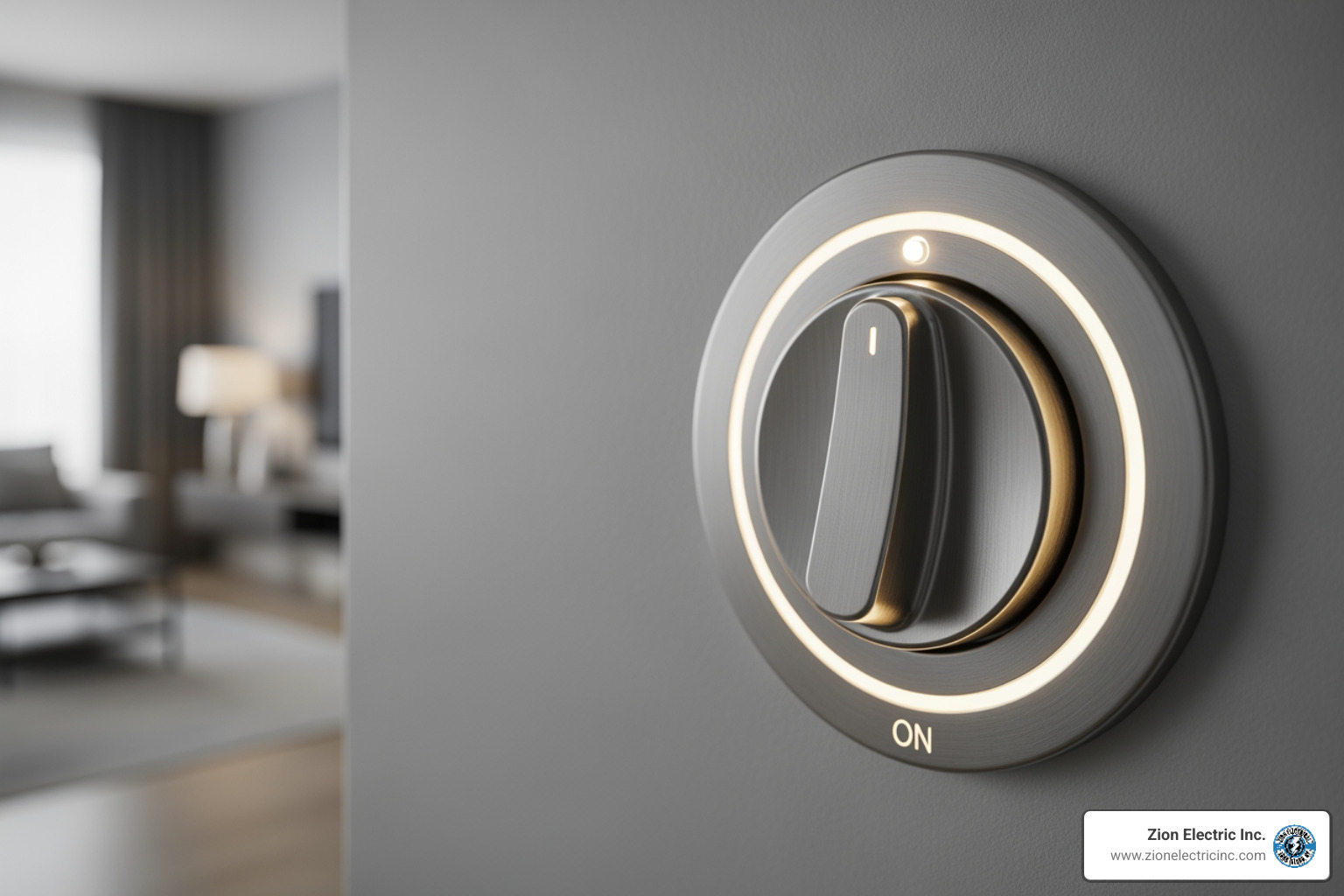
It Starts with the Bulb
Before you even look at a dimmer switch, you need to ensure your LED bulbs are up to the task.
The most crucial step: check the packaging! Your LED bulbs must be explicitly labeled "dimmable." If a bulb isn't dimmable, no matter how fancy your dimmer switch is, it simply won't work. Non-dimmable LEDs are designed to operate at full power only, and trying to dim them will likely result in buzzing, flickering, or even damage to the bulb.
The way an LED bulb dims depends heavily on its internal driver technology. This circuitry is far more complex than the simple filament in an incandescent bulb. Different manufacturers use different driver designs, which is why compatibility can be such a moving target. Some advanced dimmers, like those from Legrand, feature advanced circuitry and calibration options to overcome common issues, but the bulb still needs to be designed for dimming.
Decoding Dimmer Technology
Now, let's talk about the unsung hero of your lighting setup: the dimmer switch itself. Not all dimmers are created equal, especially when it comes to LEDs.
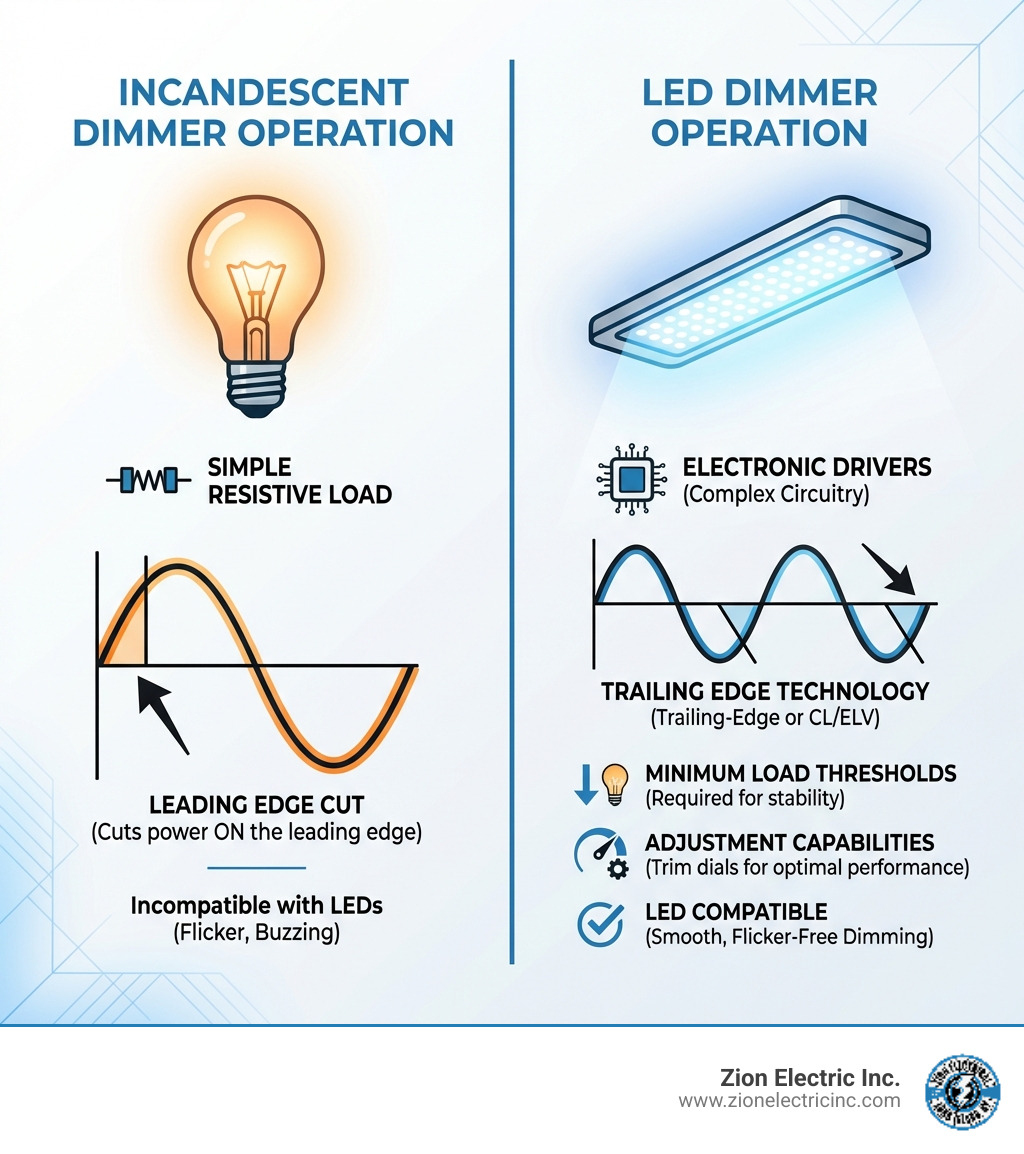
Historically, traditional dimmers were designed for incandescent or halogen bulbs. These are known as Leading-Edge dimmers(sometimes labeled RL, for Resistive Load). They work by rapidly turning the power on and off at the beginning (leading edge) of each AC current cycle, effectively reducing the overall power delivered to the bulb. This worked perfectly for resistive incandescent loads.
However, LED bulbs operate differently. Their complex electronic drivers respond much better to Trailing-Edge dimmers(often labeled C-L for Capacitive-Inductive Load, or ELV for Electronic Low Voltage). These dimmers cut the voltage to zero on the second half (trailing edge) of the waveform. This provides much smoother control, quieter operation, and prevents the dreaded flickering and buzzing often seen when pairing LEDs with old leading-edge dimmers. Manufacturers have designed LED light bulbs to be compatible with the majority of common 'trailing edge' household dimmers.
To simplify things, many manufacturers now offer Universal dimmers. These are designed to be compatible with a wider range of bulb types, including dimmable LEDs, CFLs, incandescents, and halogens. They often feature internal circuitry that adapts to the load type. Many of these universal dimmers, like some Leviton models, are also two-wire devices, meaning they don't require a neutral wire for installation, making them an easier retrofit for older Long Island homes.
So, why do older dimmers fail with LEDs? Because they were never designed to interact with the intricate electronic drivers of LED bulbs. Trying to force an LED to work with an incandescent-only dimmer is like trying to fuel a Tesla with regular gasoline – it's just not going to work.
Here’s a quick comparison:
| Feature | Leading-Edge Dimmers (RL) | Trailing-Edge Dimmers (C-L/ELV) |
|---|---|---|
| Primary Bulb Type | Incandescent, Mains Halogen | Dimmable LED, CFL, Electronic Low Voltage (ELV) |
| Dimming Method | Cuts power at the leading edge of the AC waveform | Cuts power at the trailing edge of the AC waveform |
| Performance with LEDs | Prone to flickering, buzzing, limited dimming range | Smoother dimming, quieter operation, wider dimming range |
| Complexity | Simpler, often less expensive | More complex, often more expensive |
| Compatibility | Not recommended for most LEDs | Generally best for LED compatibility |
Calculating the Load
Once you've got your dimmable LED bulbs and an LED-compatible dimmer in mind, you need to consider the load. This is where things can get a little tricky, but we'll make it simple!
Dimmer switches have a maximum wattage rating, which tells you the total amount of power they can safely handle. For traditional incandescent bulbs, this rating might be 600W. However, for LEDs, the same physical dimmer switch will have a much lower wattage rating, typically around 150W. Why the difference? Because LEDs, while using less power, have more complex electronics that place a different kind of stress on the dimmer circuitry.
When calculating the total load for your dimmer switch LED compatible system, you need to add up the wattage of all the dimmable LED bulbs connected to that single dimmer. It's important to use the actual wattage of the LED bulbs, not their "incandescent equivalent." For instance, a 9W LED bulb that's equivalent to a 60W incandescent bulb still only draws 9W of power.
A common rule of thumb, though sometimes debated by lighting professionals, is to use about 10% of the dimmer's incandescent rating for LEDs. So, a dimmer rated for 600W incandescent might handle about 60W of LEDs. However, for optimal performance and safety, we at Zion Electric Inc. recommend a more conservative approach: aim to keep your total LED wattage within 80% of the dimmer's stated LED rating. So, for a dimmer rated at 150W LED, you'd want to keep your total connected LED load under 120W. This gives you a buffer and helps prevent issues. For example, if you have six 9W dimmable LED downlights, your total load is 54W, which would fit comfortably under a 150W LED-rated dimmer (54W is well below 120W).
Always check the dimmer switch's specifications for its maximum LED wattage rating. Overloading a dimmer can lead to premature failure of both the dimmer and your bulbs, and potentially create a fire hazard.
Common LED Dimming Problems and How to Fix Them
Even with the right bulbs and a dimmer switch LED compatible system, you might encounter a few hiccups. Don't worry, many common problems have straightforward solutions.
Flickering, Buzzing, and Strobing
These are the most common and annoying issues, often signaling a compatibility problem.
- Incompatible Dimmer Type: As we discussed, trying to use an old leading-edge dimmer with LEDs is a recipe for disaster. Upgrade to a trailing-edge or universal LED-rated dimmer.
- Overloaded or Underloaded Circuit: While overloading is a concern (check your wattage calculations!), sometimes an LED dimmer might not have enough load. LEDs draw very little power, and some dimmers have a minimum load requirement to function correctly. If you're only dimming one or two very low-wattage LEDs, you might experience flickering.
- Low-Quality Bulbs: Not all "dimmable" LEDs are created equal. Some cheaper bulbs may have less sophisticated drivers that don't dim smoothly. Investing in reputable brands often pays off here.
- Loose Wiring: Sometimes the simplest explanation is the right one. Loose connections at the switch or fixture can cause intermittent power, leading to flickering. This is a safety concern and should be checked by a qualified electrician.
For a visual guide on troubleshooting, you can check out this video on how to dim LED bulbs and fixtures without flickering.
Drop-Out and Ghosting
These issues are less about aggressive flickering and more about subtle, yet frustrating, performance quirks.
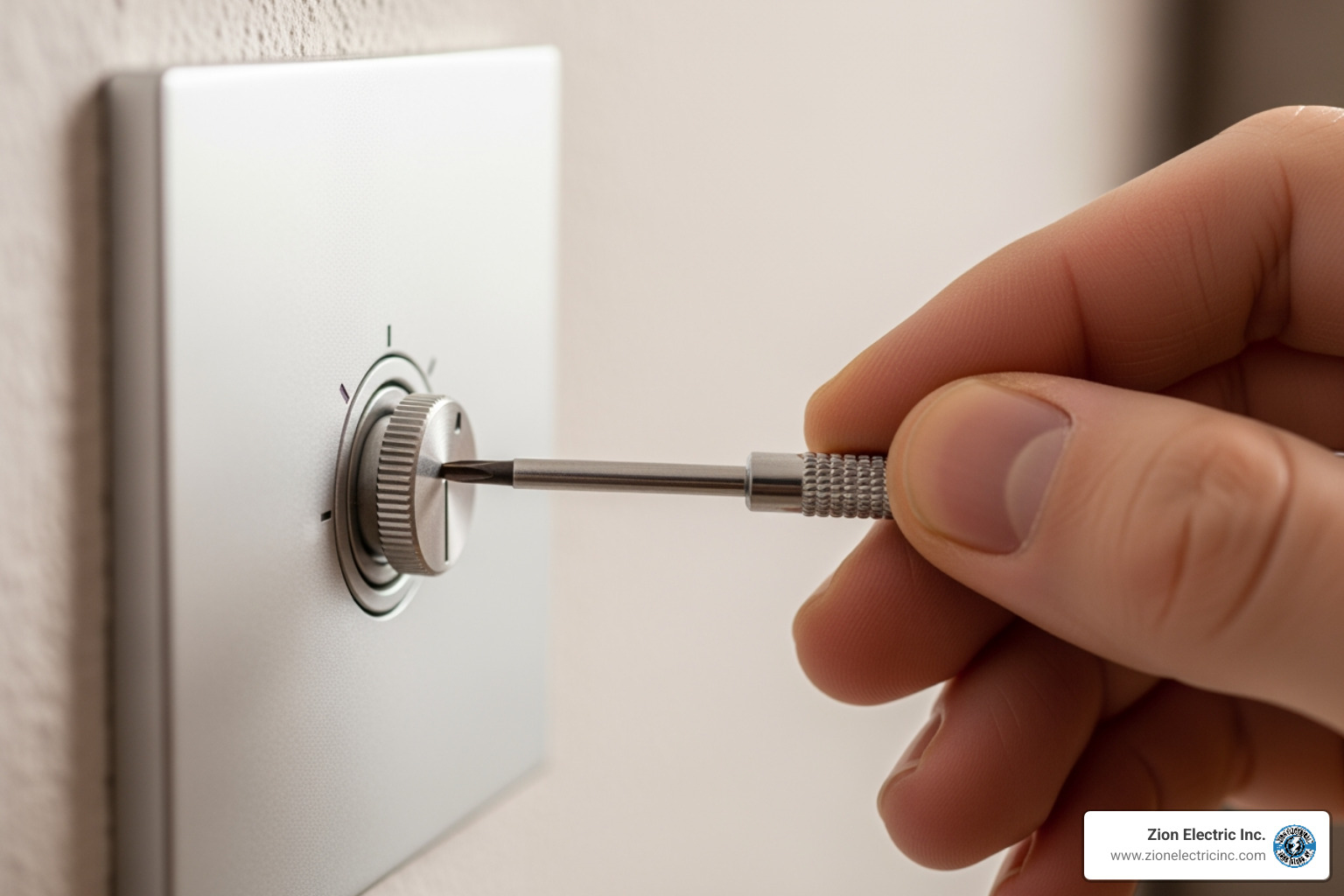
- Minimum Load Not Met: You might notice your lights suddenly turn off before the dimmer slider reaches its lowest setting. This is often because the dimmer's minimum load hasn't been met. Many LED-compatible dimmers have an adjustable low-end trim dial. This tiny dial (sometimes hidden behind the faceplate) allows you to set the lowest point of the dimming range, preventing the bulbs from dropping out or flickering at very low levels. Adjusting this can make a world of difference.
- Residual Voltage / Ghosting: Ever turn off your lights, only to see your LEDs emit a faint, eerie glow? This is called "ghosting" or "phantom glow." It happens when a tiny amount of residual electrical current (sometimes induced voltage from a nearby power line) is enough to power the super-efficient LED bulb just slightly, even when the switch is off. If your dimmer switch LED compatible model has a locator light (a small LED that glows when the switch is off so you can find it in the dark), this can sometimes be the culprit, as a small current passes through to power it. Turning the locator light off (if possible) or using a dimmer that doesn't require a neutral wire can sometimes resolve this. In older homes, this can also be a sign of a wiring issue, so it's best to consult with us if you experience persistent ghosting.
How to Choose the Right LED Dimmer Switch
Selecting the perfect dimmer switch LED compatible for your Long Island home involves more than just aesthetics. Let's break down the options and features.
Types of Dimmers: From Simple to Smart
Dimmer switches come in various styles and functionalities to suit different needs:
- Single-Pole Dimmers: These are the most common, controlling a single light fixture or group of fixtures from one location. Perfect for a bedroom or bathroom where you only have one switch for the lights.
- 3-Way/Multi-Location Dimmers: If you control the same lights from two or more different switch locations (like at the top and bottom of a staircase, or multiple entrances to a large living room), you'll need a 3-way or multi-location dimmer setup. With some universal dimmers, only one location will offer dimming control, while the others provide on/off functionality. More advanced smart dimmers often allow full dimming from multiple locations using companion switches.
- Slide Dimmers: These feature a horizontal or vertical slider to adjust brightness, often combined with a paddle or rocker switch for on/off. Many Leviton Decora and Lutron Diva models use this popular style.
- Toggle Dimmers: Offering a classic look, these have a traditional toggle switch for on/off and a separate small slider for dimming.
- Rotary Dimmers: A knob that you turn to adjust brightness and often push to turn on/off. Simple and intuitive.
- Push-Button Dimmers: You press a button to turn lights on/off, and hold or tap to dim/brighten.
- Smart Dimmers: These are the future, offering advanced control and integration with your home's ecosystem. More on these below!
Key Features of a Dimmer Switch LED Compatible Model
When shopping for a dimmer switch LED compatible model, keep these essential features in mind:
- C-L Rating: This is your primary indicator of LED compatibility. Look for dimmers explicitly labeled "C-L," "LED+," or "LED compatible." This signifies they are designed for the capacitive and inductive loads of LED and CFL bulbs.
- Wattage Capacity (150W is common): As discussed, check the dimmer's maximum LED wattage rating. Many common LED-compatible dimmers are rated for 150W of LED load. Always ensure your total connected LED wattage stays within this limit, ideally below 80% of it.
- Adjustment Dial (High-End/Low-End Trim): This is a crucial feature for fine-tuning your LED dimming performance. Most quality LED dimmers include small, adjustable trim dials (often hidden under the faceplate or on the side of the switch). These allow you to set the minimum and maximum brightness levels for your specific LED bulbs, helping to eliminate flicker, prevent drop-out, and ensure your lights dim as low as you want them to.
- No Neutral Wire Required: For many older homes on Long Island, finding a neutral wire in the switch box can be a challenge. Some LED dimmers are designed to work without a neutral wire, making them easier to install as replacements for existing switches. However, smart dimmers often do require a neutral wire for reliable operation.
How Smart Home Compatibility Influences Your Choice
For those looking to accept the future of home automation, smart dimmers offer unparalleled convenience and control. A dimmer switch LED compatible with your smart home system can open up a world of possibilities:
- Voice Control: Imagine walking into a room and simply saying, "Alexa, dim the living room lights to 50%," or "Hey Google, turn off the kitchen lights." Smart dimmers integrate seamlessly with popular voice assistants like Amazon Alexa, Google Assistant, and Apple HomeKit (Siri), allowing for hands-free control.
- Scheduling and Automation: Program your lights to turn on automatically at sunset, dim gradually for bedtime, or even simulate occupancy when you're away from your Long Island home.
- App Control: Manage your lighting from anywhere using a smartphone app. Whether you're on the couch or on vacation, you can adjust brightness, set scenes, and monitor your lighting.
- Wi-Fi Connectivity: Most smart dimmers connect directly to your home's Wi-Fi network, allowing them to communicate with your smart home hub or directly with your phone. Some, like Lutron Caseta, use proprietary wireless protocols for improved reliability.
When considering smart dimmers, check which ecosystems they "work with." Products like the Lutron Caseta Smart Dimmer Switch or Kasa Smart Dimmer Switch are popular examples that integrate with various platforms. Just remember that many smart dimmers, unlike some basic LED dimmers, typically require a neutral wire for installation.
Frequently Asked Questions about LED Dimmers
We hear a lot of questions about LED dimmers from our Long Island customers. Here are some of the most common ones, answered by our expert electricians.
Can I use my old incandescent dimmer with LED bulbs?
In most cases, no. Old incandescent-only dimmers are not designed to safely and effectively control dimmable LED bulbs. The different electrical characteristics of LEDs (low wattage, complex electronic drivers) mean that incandescent dimmers will likely cause flickering, buzzing, limited dimming range, or even damage to your LED bulbs and the dimmer itself. It's best to upgrade to a dedicated dimmer switch LED compatible model.
Why do my "dimmable" LEDs still flicker with a new dimmer?
This is a frustrating experience, but often fixable! Even with a new LED-compatible dimmer, flickering can occur due to:
- Bulb-Dimmer Mismatch: Even within LED-compatible products, some specific bulb and dimmer combinations just don't play well together. Check the dimmer manufacturer's website for a compatibility list for specific LED bulb models.
- Trim Dial Not Adjusted: Most LED dimmers have a low-end trim adjustment. This small dial allows you to set the minimum brightness level for your specific bulbs. If it's set too low, the bulbs might flicker or drop out. Adjusting this is often the solution.
- Low-Quality Bulbs: Unfortunately, not all dimmable LEDs are created equal. Some cheaper bulbs might have less robust drivers that struggle with smooth dimming, even with a good dimmer.
- Wiring Issues: Less common, but loose or incorrect wiring can cause flickering. This is where professional help is crucial.
How many LED bulbs can I put on one dimmer switch?
This depends on the dimmer switch's maximum LED wattage rating. As a general guideline, a dimmer switch LED compatible model often has an LED rating of around 150W. To ensure optimal performance and longevity, we recommend keeping the total wattage of all connected dimmable LED bulbs to no more than 80% of this stated LED rating. So, for a 150W LED dimmer, aim for a total load of no more than 120W of LEDs. Always consult the dimmer's specifications.
Get Flawless Dimming with Professional Installation
Navigating dimmer switch LED compatible systems can be a bit of a maze, but the payoff is worth it: beautiful, energy-efficient lighting that improves your home. Achieving flawless dimming starts with ensuring your LED bulbs are dimmable, choosing the right trailing-edge or universal LED-rated dimmer, and carefully calculating your load. Don't forget those crucial trim dial adjustments!
The importance of a matched system cannot be overstated. An incompatible setup not only leads to annoying issues like flickering and buzzing but can also shorten the lifespan of your bulbs and dimmers, and in rare cases, pose a safety risk.
At Zion Electric Inc., we believe in safety first. Electrical work, especially with modern lighting controls, requires precision and adherence to local codes. For guaranteed compatibility and safe installation on Long Island, trust our expert electricians. We've been serving the Long Island community for over 30 years, providing reliable, high-quality electrical solutions for homes and businesses. We can help you choose the right LED-compatible dimmers, install them correctly, and ensure your lighting system performs beautifully.
Learn more about our lighting installation services and let us brighten your home with perfectly dimmed LED lighting.